

Asset Appreciation
What We Create Has More Potential Than We Might Think

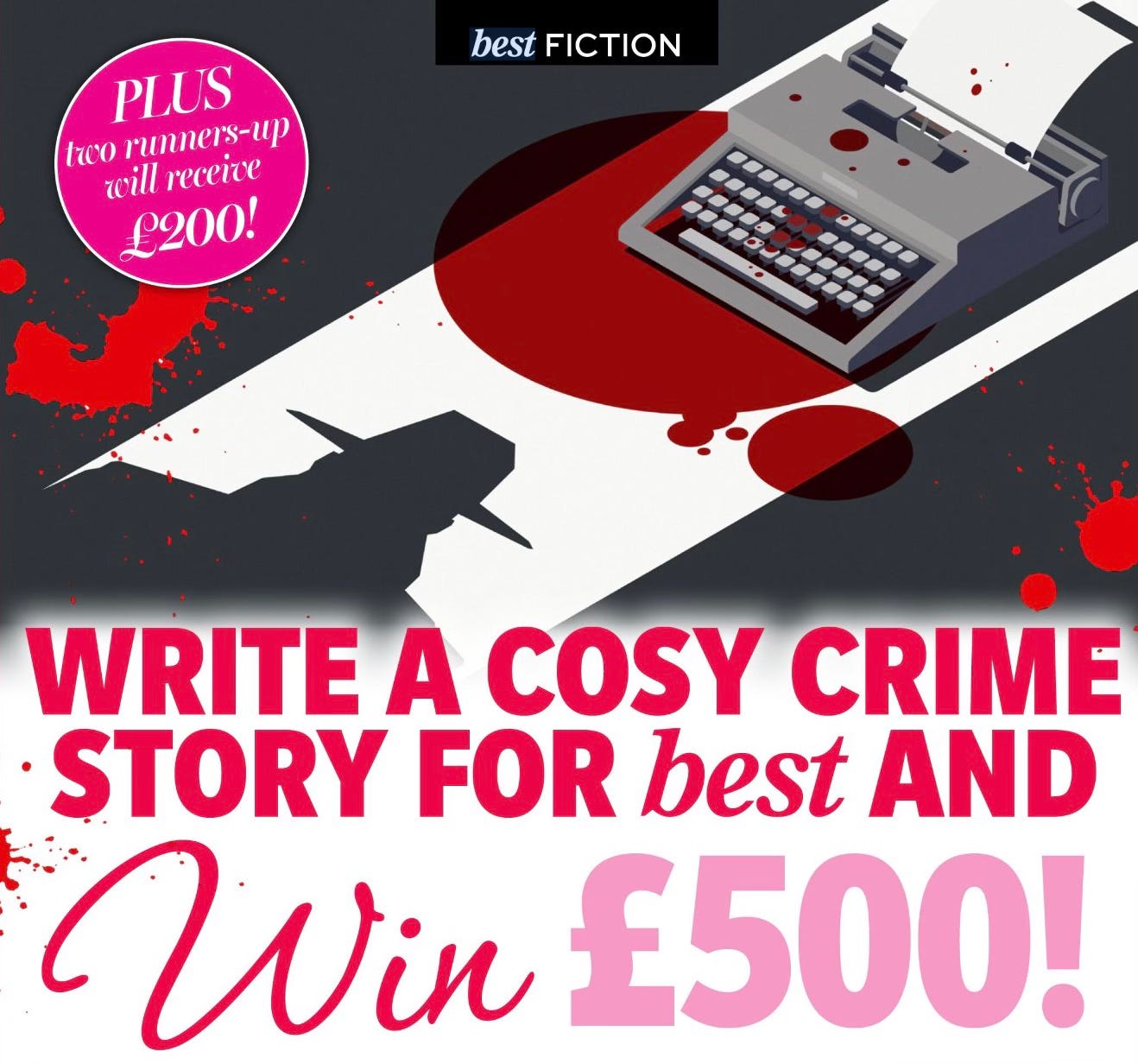
It was the blood splatters that first caught my attention. Then the bold Win £500 statement, followed by the Write a cosy crime storystatement.
I remember thinking, This looks right up my street. I’ll take a screenshot and look through the terms and conditions later.
Years ago, the UK women’s magazines carried a lot more fiction than they do today. Over a decade ago, practically every women’s magazine had at least one short story slot in them, if not more. Now, there are only a handful.
That’s a shame because I learned a lot about crafting fiction from those magazine short story submissions I made (many of which were published). Much of what I learned then I now use today in my novels.
But occasionally, magazines run a short story competition, one of which is Best, hence their recently launched cosy crime competition.
When I had a few moments, I slipped into boring-old-fart mode and read the terms and conditions.
Oh, how my heart sank at first. But then it bounced back up again, but not for the reason you probably expect.
Let me explain.
When I read the rights they require from the winning entry (and the two runners-up), I realised the competition wasn’t right for me. They want ALL rights. That means EVERYTHING.
Now, that’s not something I’m prepared to do in my writing business today, particularly when it comes to fiction. (I sometimes do this with my non-fiction, but only in limited circumstances.)
Now, let me be quite clear: I’m not focussing on this competition to deride it or its entrants in any way. For some writers, this competition might be right for them and their writing business at this point in time.
The reason my heart almost jumped for joy is because I think Best’s terms and condition are some of the clearest and simplest I have come across recently. They have offered clear examples, when it comes to explaining the different rights that writers who enter the competition are signing over to them (should they be one of the lucky winners).
And the reason I want to focus on them is because they illustrate brilliantly the fact that when we create a short story, we’re not just creating a short story for print. We are creating an intellectual property asset that can be used in a myriad of ways (which Best may exploit if you happen to win).
So let’s take a closer look:
“The prize is publication of your short story in Best magazine, plus £500. Two runner ups will win £200 and publication of their story in Best.”
Woohoo! Winners will be paid some cash, and it’s a good payment, considering there’s no cost to enter the competition in the first place.
But it’s worth remembering that payment is buying all the following rights in the short story (and more):
“If you are a winner or one of the runners up of this competition, you grant to the publisher of Best Magazine, the National Magazine Company Limited (”Hearst”) all rights to the story written by you (the “Story”) on an exclusive and perpetual basis including but not limited to the right to:”
So, one of the important bits here is the phrase all rights. If you win (or are a runner-up) you are giving them everything in exchange for the prize money.
And this is perpetual. That means it is forever.
And just to ram home the point, it is also exclusive. Nobody else can do anything with this story (including you, the writer) in any format, forever.
The terms then give some (but not all) examples of how they could use your material further.
“i) publish and/or republish the story in any of Hearst’s publications or as part of a compilation of stories in a printed book:”
Although Best are running the competition, the magazine’s parent company, Hearst, has the right to reprint your story in any of its publications. (Currently, that’s over 200 different magazines around the world.)
They will also have the right to include it as part of a printed book. This means they could bring together the winning entries and the runners up, of all of their short story competitions over the course of a year into one print book, and sell that. (And the writers would not get any more money for that use.)
But what a fantastic idea! As writers, we can do something similar with all of our short stories (assuming we haven’t granted those rights to someone else.)
If you’ve written several short stories, you could create a new asset: an anthology, or collection, which you could sell in an eBook or print format. Being the rights holder entitles us to do that.
“ii) to create a digital version of the story for publication on any of Hearst’s websites, social media accounts or as part of a compilation of stories for an e-book which can be downloaded for a fee from a website of Hearst’s choice:”
This is them explaining that they’ll have the right to use your story in a variety of electronic and digital formats, whether it’s an Instagram post, or on their website, or by including it in an eBook, which they might sell. (And Hearst can charge whatever they want for this ebook, and the writers won’t get any more money for it.)
Bear in mind that, if you entered this competition and were one of the winning entrants, you wouldn’t have the electronic right to use your story on your website, or on your Substack, or on your blog, because they have all the rights.
But, again, just like with the print book idea they mentioned earlier, they could do something similar in eBook format. And so could we, if we retain the rights to our stories.
So, already, we’ve gone from writing a couple of stories for a magazine to now collating them together to create a collection of anthology, which we could self-publish in eBook and paperback formats (all together now…) if we retain the rights to do so.
“iii) to create an audio version of the Story to be included in a compilation of stories for an audio-book which can be downloaded for a fee from a website of Heart’s choice or to be broadcast on the radio or a podcast of Hearst’s choice.”
There’s an explosion of audio at the moment. Even though we might have sat down to write a short story, hoping it will be published in print format, there are many other formats we could use to tell that same story.
These terms and conditions suggest that Hearst might create an audio-book of the winning stories and sell that. Or they could licence a radio station to broadcast the story, or a podcast show could use it.
(At the moment, Hearst currently owns two radio stations in the US, and several of its 200 magazines also operate podcasts.) They already own the different platforms to make the most of this content.
“or (iv) the right to option the Story to be produced in other mediums, including but not limited to film, television, web series or radio.”
So if you come up with a cracking idea, Hearst could develop it into a film, television series, or more… with no further payment to you.
But it’s only a short story, you cry! Yes, but some feature films have been developed from short stories. (Check out Minority Report and Brokeback Mountain. Interestingly, Annie Proulx’s Brokeback Mountain was first published in The New Yorker magazine on 13th October 1997, and won the National Magazine Award for fiction in 1998. Then a slightly expanded version was published in a collection of Annie Proulx’s short stories in 2000, before later being adapted into a film in 2005.)
That’s the thing with a short story. You just never know where it may lead.
We don’t just write a short story.
It may seem a strange thing to say here, but what I like about these terms and conditions is how they illustrate the potential of what a simple short story can become.
Although we may think we have only written a short story, what we have created is an asset that has the potential to grow into many different things. But that potential only exists if we retain the rights.
And we mustn’t just think about the formats that exist now. In the years ahead, new formats will be created. How far off is it until we’re buying clothes with electronic displays that allow us to read a short story on our sleeve, or electronic screens at bus stops that display a story that is short enough to read before the next bus turns up?
The next time you create something, give yourself a pat on the back for creating it. And then ask yourself, how else can I repurpose this? What else can I do with this?
And the more rights you retain, the more opportunities there are for you to do that.
Upcoming Events
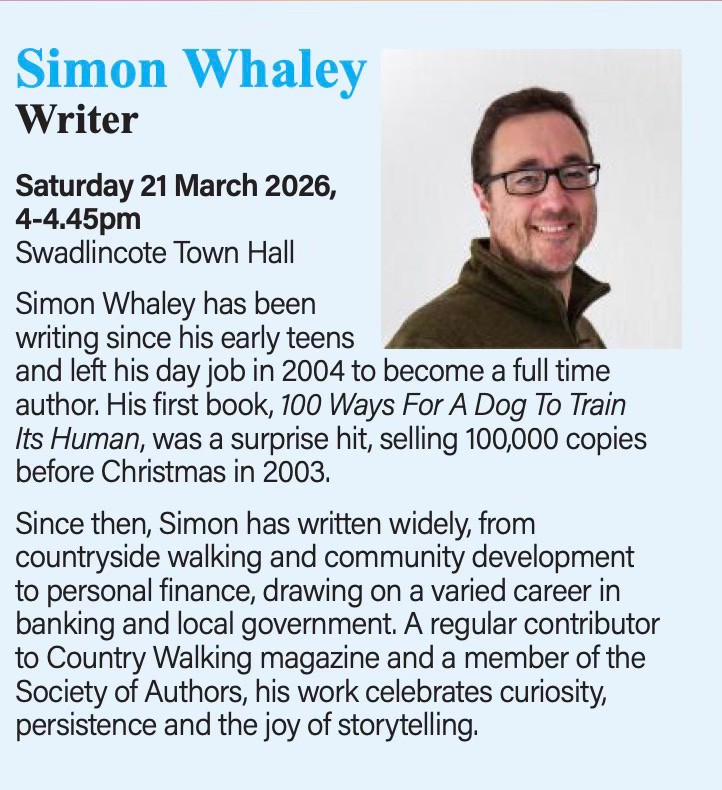
Just a reminder to anyone in the Derbyshire/Burton-on-Trent area of the UK on Saturday 21st March, that I’m appearing at the Swadlincote Literary Festival at 4pm, talking about How To Become A Writer (And Live To Tell The Tale).
There are lots of other great events taking place—check out the full details here:
https://www.swadlincotefestivalofwords.co.uk/
I’m also running a couple of workshops ate the Leeds Creative Writing Weekend (6th-8th November 2026). Full details here.
Slushpile Mountaineering
My agent, Kate Nash, regularly posts on her Slushpile Mountaineering Substack (which I can throughly recommend). But her latest post about using AI to craft query letters/emails to agents is illuminating on so many levels! I urge you to read this one, especially if you are looking for an agent at the moment.

Until next month, keeeeeeeeeep writing!
Best wishes,
Simon
Future media (Woman's weekly, Best of Woman's weekly, Woman mags and also any seasonal WW specials) also take all rights.
However, I know of one womag writer who was allowed to have work accepted and published under the old contract recently.
It's unfair of Future Media, because when the all rights contracts came out, it was take it or leave it. This writer decided to leave it but now Future have changed their mind about asking all writers to sign an all right contract.
I suspect that this writer is being paid under the old pay rate too, which I suspect is a higher rate than those under the all rights contract.
It's a good point about putting womag stories in e-collection and selling it, but I don't have the IT skills required and even if I had them, I don't feel that it would sell that well. I used to have my stories and poems on my website, but no -one read them!
The womag market is shrinking as every year passes, so we have to do what we can to try and clinch those precious slots. It's more competitive than it's ever been.
Such a great reminder of the value of our work, Simon, and very timely for me.